




Blog
How to Choose a Bathroom Vanity That Fits Your Space, Budget, and Daily Routine
Choosing a bathroom vanity sounds simple until you realize it affects almost everything you do in the bathroom: washing, storage, cleaning, plumbing, walking space, and the overall look of the room. A vanity that looks beautiful online can still feel cramped, collect water in the wrong places, or block a door if the size and layout are wrong.
The best way to choose a bathroom vanity is to start with fit, then move to storage, sink style, material, installation, and maintenance. Style matters, but it should come after the practical details. A pretty vanity that does not match your plumbing or storage needs is just expensive furniture with water problems.
This guide will help you compare bathroom vanity types, decide which features are worth paying for, avoid common buying mistakes, and understand whether a compact option such as the Cittaneo ERBA 24W Walnut Bathroom Vanity with Black Sink is suitable for your home.
Quick Buying Conclusion: What Matters Most Before You Buy
If you are trying to make a decision quickly, focus on three things: the right size, the right installation type, and the right storage layout. These affect daily use much more than small design details.
- Best for small spaces: A 24-inch single-sink vanity works well for powder rooms, guest bathrooms, apartment bathrooms, and laundry rooms where floor space is limited.
- Best for families: A wider vanity with more drawers or a double-sink layout may be more convenient if multiple people use the bathroom every morning.
- Best for easy cleaning: Smooth cabinet finishes, ceramic sinks, and simple hardware are usually easier to maintain.
- Be careful if: your plumbing is not centered, your wall cannot support a mounted unit, or you have very limited clearance around doors and drawers.
Before ordering, confirm the product dimensions, plumbing location, included accessories, faucet compatibility, drain requirements, delivery conditions, and return policy. This is the boring part, which means it is usually the part that saves you money.
How to Choose a Bathroom Vanity by Type
Bathroom vanities are not all built for the same room or user. The right type depends on how much space you have, how much storage you need, and how the vanity will be installed.
| Vanity Type | Main Advantage | Main Limitation | Best For |
|---|---|---|---|
| Freestanding Vanity | Classic look, stable base, often easier to place | Can make a small bathroom feel heavier | Primary bathrooms, guest baths, traditional layouts |
| Wall-Mounted or Floating Vanity | Creates a lighter look and frees floor space visually | Requires proper wall support and careful installation | Small bathrooms, modern bathrooms, compact layouts |
| Single-Sink Vanity | Saves space and usually costs less than double-sink options | Less convenient for two people using it at the same time | Powder rooms, apartments, guest bathrooms |
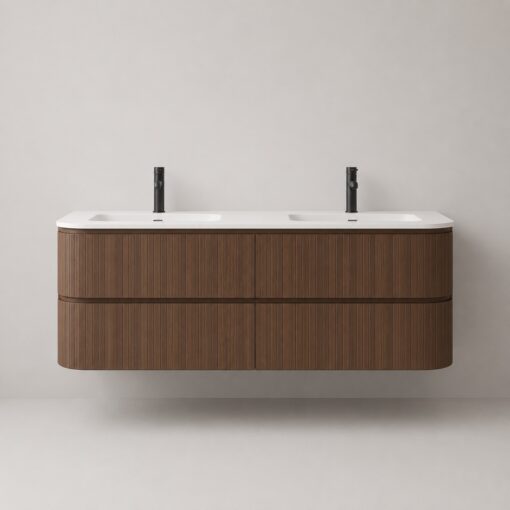
| Double-Sink Vanity | Better for shared morning routines | Needs more width, plumbing planning, and cleaning time | Primary bathrooms and family bathrooms |
| Vessel Sink Vanity | Creates a strong design focal point | Faucet height and splash control need extra attention | Modern bathrooms and powder rooms |
| Integrated Sink Vanity | Smooth surface, fewer seams, often easier to wipe down | Less flexible if you want to change the sink later | Busy bathrooms and low-maintenance homes |
Size and Fit: The First Rule of Buying a Bathroom Vanity
Size is the first decision because it controls everything else. A vanity that is too wide can block traffic. A vanity that is too deep can make the bathroom feel tight. A vanity that is too small may leave you with no counter space and no useful storage.
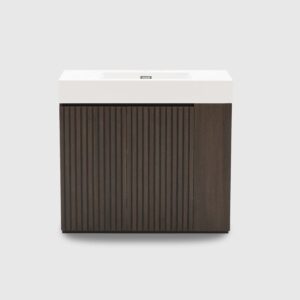
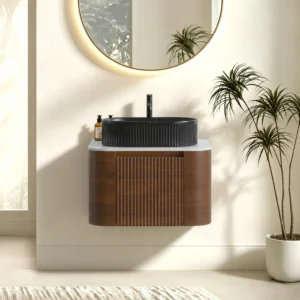
For small bathrooms, a 24-inch vanity is often a practical starting point. It can provide a real sink and storage without taking over the room. The Cittaneo ERBA 24W Walnut Bathroom Vanity with Black Sink is positioned as a compact 24-inch bathroom vanity for small bathrooms, powder rooms, guest bathrooms, and laundry rooms. That makes it worth considering if your space is limited but you still want a finished, furniture-style look.
Measure More Than the Wall
Do not only measure the wall where the vanity will sit. Measure the full use area around it. You need enough space to stand comfortably, open drawers, clean around the sink, and move past the vanity without turning sideways like you are sneaking through a bad apartment hallway.
- Measure wall width, available depth, and usable floor space.
- Check whether the bathroom door, shower door, or cabinet door will hit the vanity.
- Confirm drawer clearance before choosing a drawer-heavy design.
- Measure the delivery path, including stairs, hallways, elevators, and tight corners.
- Review the product dimensions on the product page before ordering.
Storage: Drawers, Doors, and What You Actually Use Every Day
Bathroom storage should match your habits. If you mostly store small items such as skincare, razors, makeup, toothbrushes, and hair tools, drawers are usually more useful than one large open cabinet. If you store taller bottles or cleaning supplies, a door cabinet may be better.
The ERBA 24W model includes soft-close drawers, which can help keep toiletries, towels, and daily essentials organized. Soft-close hardware is not just a luxury detail. It reduces slamming, feels better in daily use, and can be especially useful in small homes where every sharp cabinet noise announces itself like an unpaid bill.
When More Storage Is Worth Paying For
More storage is worth paying for when the bathroom has no linen closet, medicine cabinet, or nearby shelf. It is less important in a powder room used mainly by guests. In that case, a compact vanity with modest storage may be enough.
Sink Style and Counter Space: Looks vs. Daily Convenience
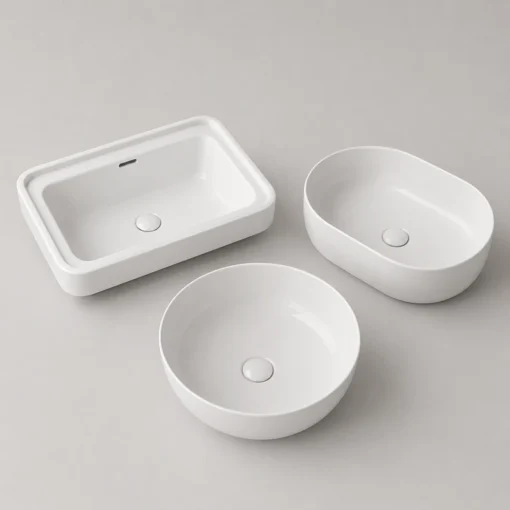
The sink affects cleaning, faucet choice, splash control, and available counter space. A vessel sink can look modern and sculptural, while an integrated sink may be easier to wipe down because there are fewer edges and transitions.
The ERBA 24W vanity uses a black oval ceramic sink. This can be a strong design choice, especially with a walnut cabinet finish. Ceramic is commonly appreciated in bathrooms because it is smooth and relatively easy to clean, but darker sinks may show water spots or soap residue more visibly depending on lighting and water hardness.
Before choosing a vanity with a vessel-style or raised sink, confirm the faucet height and reach. If the faucet is too short, washing your hands feels awkward. If it is too tall or poorly positioned, splashing can become part of your personality.
Materials and Finish: What to Look For Before Buying
Bathroom vanities live in a difficult environment. They deal with humidity, water splashes, cleaning products, dropped hair tools, and daily opening and closing. Materials and finish matter because they affect durability and maintenance.
For the ERBA 24W Walnut Bathroom Vanity with Black Sink, the listed materials include ceramic, MDF, melamine, and plywood, with black and walnut as the listed colors. The cabinet also features a walnut wood grain finish and a moisture-resistant, stain-resistant surface. These details are useful for buyers who want the warmth of a wood look without choosing a vanity that requires delicate care.
What Material Details Actually Matter?
- Sink material: A smooth ceramic sink is generally easy to wipe down and works well for daily washing.
- Cabinet surface: A moisture-resistant surface helps protect against routine bathroom humidity and splashes.
- Edges and seams: Fewer hard-to-reach seams usually means easier cleaning.
- Finish color: Walnut adds warmth, while black accents create stronger contrast.
- Hardware quality: Drawers and rails affect how the vanity feels after months of use, not just on day one.
Installation and Compatibility: Do Not Skip the Boring Details
Installation can change the total cost and difficulty of a bathroom vanity purchase. A vanity may require cabinet assembly, wall support, plumbing connection, faucet installation, drain alignment, and sealing around wet areas.
For wall-mounted or wall-supported designs, confirm that the wall can support the fixture and that mounting hardware is suitable for your wall type. Drywall alone is not the same as proper blocking or studs. Plumbing should also align with the vanity layout, especially if the drawers occupy space where your pipes currently sit.
Confirm These Before Ordering
- Vanity width, depth, and height
- Sink position and faucet compatibility
- Drain location and P-trap clearance
- Wall support requirements if the unit is mounted
- Whether faucet, drain, mirror, or plumbing parts are included
- Whether professional installation is needed
If you are replacing an old vanity, take photos of the existing plumbing before choosing a new one. It is not glamorous, but neither is discovering that your new drawer collides with a pipe.
Which Features Are Worth Paying For?
Not every feature deserves extra money. Some improve daily use. Some are only useful for certain bathrooms. Some are mostly there because product pages need something to talk about.
Necessary Features
- Correct size: No feature can fix a vanity that does not fit.
- Moisture-resistant finish: Bathrooms need surfaces that can handle everyday humidity and splashes.
- Usable storage: Drawers or cabinets should match what you actually store.
- Compatible plumbing: Sink and drain layout must work with your bathroom.
Features That Improve Daily Experience
- Soft-close drawers: Helpful for quieter use and a more finished feel.
- Easy-clean sink surface: Reduces cleaning frustration over time.
- Rounded corners: Useful in tight bathrooms where sharp corners feel intrusive.
- Coordinated towel rack: Practical if the bathroom lacks a good towel location.
Features That Depend on Your Taste
Fluted panels, curved silhouettes, black sinks, and walnut finishes can make a bathroom feel more designed. They are worth paying for if they match your home’s style. They are less important if the bathroom is purely functional or if you plan to remodel again soon.
Budget and Long-Term Cost
The listed product price is only one part of the real cost. The total cost of buying a bathroom vanity may include faucet, drain, P-trap parts, installation labor, wall reinforcement, delivery, old vanity removal, sealing materials, and possible return costs if the product does not fit.
Entry-level vanities usually focus on basic function and simple finishes. Mid-range options often add better storage, improved finishes, stronger design details, and better daily usability. Premium vanities may offer higher-end materials, larger sizes, more refined hardware, or custom-style construction.
For many homeowners and apartment owners, a compact mid-range vanity can be the most practical choice. It gives the bathroom a finished look without forcing a major renovation. Just make sure you are not paying for design details while ignoring installation costs. That is how a “simple upgrade” becomes a tiny financial crime scene.
Pros and Cons of a Compact 24-Inch Walnut Vanity
A compact vanity like the ERBA 24W can be a smart option, but it is not right for every bathroom.
| Pros | Why It Matters |
|---|---|
| Space-saving size | Useful for powder rooms, guest bathrooms, small apartments, and laundry rooms. |
| Warm walnut look | Adds visual warmth without making the bathroom feel too cold or plain. |
| Black ceramic sink | Creates contrast and a modern focal point. |
| Soft-close drawers | Improves daily use and helps reduce slamming. |
| Curved and fluted design | Softens the cabinet shape and adds texture in a small room. |
| Cons | Who May Be Affected |
|---|---|
| Limited counter space | May not suit users with many daily grooming products. |
| Single-sink layout | Not ideal for couples or families sharing a busy primary bathroom. |
| Black sink maintenance | May show water spots or soap residue more than lighter sinks. |
| Installation must be checked | Wall support, plumbing clearance, and accessory compatibility should be confirmed. |
| Style-specific finish | Walnut and black may not match every bathroom color palette. |
Common Bathroom Vanity Buying Mistakes
- Choosing by appearance only. A vanity can look perfect in photos and still be wrong for your room. Measure the space, check clearance, and compare the product dimensions before buying.
- Ignoring plumbing location. Existing pipes may not line up with the new sink or drawers. Check drain and water supply positions before ordering.
- Forgetting drawer clearance. Drawers need space to open fully. Confirm they will not hit the toilet, door trim, shower glass, or wall.
- Assuming all accessories are included. Faucets, drains, mirrors, and plumbing parts may vary by model. Review the included parts carefully.
- Not checking installation requirements. Mounted or wall-supported vanities may need proper wall structure. Confirm this before installation day.
- Underestimating cleaning needs. Dark sinks, textured panels, and decorative surfaces can look beautiful but may need more careful wiping.
- Buying too small for a main bathroom. A compact vanity is useful in small spaces, but it may feel limiting in a shared daily bathroom.
- Skipping return policy details. Large bathroom items can be costly to return. Review delivery and return conditions before purchase.
Who Should Buy a Compact Vanity Like the ERBA 24W?
Good Fit For
- Homeowners updating a powder room or guest bathroom
- Apartment owners with limited bathroom space
- First-time buyers who want a complete vanity look without choosing every part separately
- People who prefer warm walnut tones with modern black contrast
- Bathrooms where soft-close drawers and a towel rack add real daily value
Consider Another Option If
- You need a double sink for two people using the bathroom at once.
- You store many large bottles, towels, or cleaning supplies under the sink.
- Your bathroom needs a very light color palette and a black sink would feel too strong.
- Your plumbing layout makes drawer clearance difficult.
Not Recommended If
- You cannot confirm that the vanity fits the available space.
- You are unwilling to check wall support or installation conditions.
- You want a large countertop for makeup, hair tools, or multiple users.
- You need a vanity for heavy family use but only have room for minimal storage.
Bathroom Vanity Buying Checklist
Use this checklist before placing your order:
- Confirm the product dimensions on the product page.
- Measure the available wall width, depth, and walking space.
- Check door, drawer, toilet, and shower clearance.
- Confirm sink type and faucet compatibility.
- Check drain location and plumbing clearance.
- Review whether the faucet, drain, mirror, and mounting hardware are included.
- Confirm whether professional installation is needed.
- Check wall support requirements for mounted or wall-supported designs.
- Review material, finish, and cleaning instructions.
- Confirm delivery path through stairs, hallways, elevators, and doorways.
- Review delivery, cancellation, and return conditions before ordering.
FAQ: How to Choose a Bathroom Vanity
What size bathroom vanity should I choose?
Choose a vanity size based on your available space, not only the width of the wall. Measure width, depth, walking clearance, door swing, and drawer clearance. A 24-inch vanity is often suitable for small bathrooms, powder rooms, guest bathrooms, and apartments, while larger shared bathrooms may need a wider vanity or double-sink layout.
Is a 24-inch bathroom vanity too small?
A 24-inch vanity is not too small if the bathroom is compact and used by one person at a time. It can work well in powder rooms, guest bathrooms, laundry rooms, and small apartments. It may feel too limited for a primary bathroom where two people need storage, counter space, and simultaneous use.
Are soft-close drawers worth it in a bathroom vanity?
Soft-close drawers are usually worth it if the vanity is used daily. They reduce slamming, feel smoother, and can make the cabinet more pleasant to use over time. They are especially helpful in small homes, shared bathrooms, and guest bathrooms where quieter operation improves the overall experience.
Is a black bathroom sink hard to maintain?
A black sink can be easy to clean if the surface is smooth, but it may show water spots, soap residue, or mineral marks more visibly than a white sink. Wiping the sink regularly with a soft cloth and avoiding abrasive cleaners can help maintain the finish.
Should I choose a freestanding or wall-mounted vanity?
Choose a freestanding vanity if you want a more traditional installation and a grounded furniture look. Consider a wall-mounted or floating vanity if you want the bathroom to feel more open. For mounted designs, always confirm wall support, mounting requirements, and plumbing clearance before buying.
What should I check before buying a bathroom vanity online?
Check the dimensions, material, finish, sink type, faucet compatibility, drain location, included accessories, installation instructions, delivery conditions, and return policy. Product photos are useful for style, but specifications determine whether the vanity will actually work in your bathroom.
Final Buying Advice: How to Choose a Bathroom Vanity Without Regret
The best bathroom vanity is the one that fits your space, supports your routine, and does not create new installation problems. If your bathroom is small, start with compact single-sink options and prioritize clearance, storage, and easy cleaning. If your bathroom is shared by multiple people, a larger vanity with more storage may be worth the extra space and cost.
If you like a warm modern look, a walnut vanity with a black ceramic sink can bring strong contrast and style to a small bathroom. The Cittaneo ERBA 24W Walnut Bathroom Vanity with Black Sink is a practical option to compare if you want a compact vanity with soft-close drawers, curved fluted details, a black sink, and a coordinated towel rack. Before buying, confirm the dimensions, installation requirements, plumbing compatibility, and included accessories.
Explore the available options and compare the specifications that matter most for your space. Choose the bathroom vanity that fits your room first, your routine second, and your style third. That order prevents most expensive mistakes.