















Blog
How to Choose Bathroom Vanities That Fit Your Space and Routine
The best bathroom vanities are not necessarily the largest or most expensive. The right choice is the one that fits your available space, works with your plumbing, provides enough storage for your household, and can tolerate the moisture and cleaning demands of a bathroom.
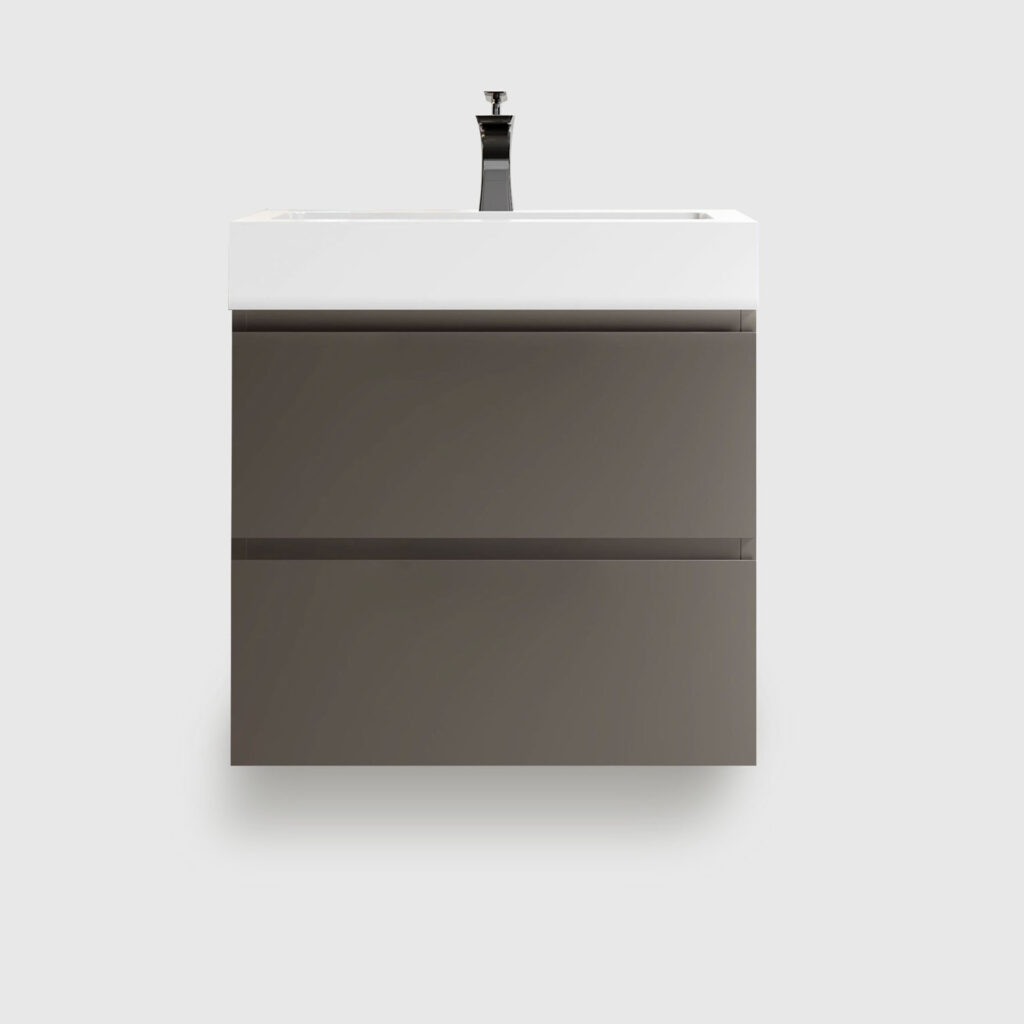
This guide explains how to compare vanity types, sizes, materials, storage layouts, installation requirements, and long-term costs. It also uses the Alice 24-inch Gray Bathroom Vanity with Sink as an example of the questions consumers should answer before ordering a compact vanity.
Quick Buying Decision
A compact single-sink vanity is usually a good choice for:
- Powder rooms and smaller full bathrooms
- Apartments, condos, and guest bathrooms
- Households that do not need two sinks
- Buyers who want enclosed storage without occupying too much floor space
- Bathrooms where a wider countertop would restrict movement
Consider a different option if:
- Two people regularly use the bathroom at the same time
- You need extensive countertop space for daily products
- Your plumbing cannot be adjusted to fit the cabinet
- The bathroom door, shower door, or toilet would conflict with the vanity
- You want open shelving rather than drawers or enclosed storage
The three most important buying factors are: the actual installed dimensions, plumbing compatibility, and usable storage. Before ordering, confirm exactly what is included with the vanity and whether the dimensions shown refer to the cabinet, countertop, sink, or complete assembled unit.
Bathroom Vanity Types Compared
The mounting style and sink configuration affect storage, cleaning, installation, and the visual weight of the room. Understanding these differences can eliminate unsuitable models before you begin comparing finishes.
| Vanity Type | Main Advantages | Main Limitations | Best For |
|---|---|---|---|
| Freestanding vanity | Familiar furniture-like appearance, generally straightforward to position, and often provides substantial cabinet or drawer storage | Floor area around the base may be harder to clean, and the cabinet can make a small room feel more enclosed | Family bathrooms, traditional layouts, and buyers who prioritize storage |
| Wall-mounted vanity | Leaves the floor visible, can make a compact bathroom feel more open, and simplifies floor cleaning | Requires suitable wall support and careful installation; storage may be more limited | Modern bathrooms, apartments, and spaces where visual openness matters |
| Single-sink vanity | Uses less width, leaves more flexibility in compact layouts, and usually costs less to install than two sinks | Less convenient when multiple people need the sink simultaneously | Powder rooms, guest bathrooms, apartments, and smaller primary bathrooms |
| Double-sink vanity | Allows simultaneous use and can provide separate storage areas for two users | Requires more wall space, more plumbing work, and often reduces uninterrupted countertop area | Shared primary bathrooms and larger family bathrooms |
| Vanity with drawers | Makes small toiletries and grooming products easier to organize and reach | Drawer boxes can conflict with plumbing if the internal layout is not designed around the pipes | Consumers who want organized daily storage |
| Vanity with cabinet doors | Can accommodate taller bottles, cleaning products, and flexible storage bins | Items at the back may be harder to reach without organizers | Bathrooms that need storage for larger or irregularly shaped items |
How to Choose the Right Bathroom Vanity Size
Vanity width is only one measurement. You also need to consider depth, overall height, countertop overhang, sink projection, drawer movement, and the space required to stand comfortably in front of the cabinet.
Start by measuring the wall from the nearest obstruction on one side to the nearest obstruction on the other. Obstructions may include door trim, baseboards, heating vents, toilets, bathtubs, shower enclosures, outlets, and existing plumbing.
Then measure how far the vanity can project into the room. A cabinet that is only a few inches deeper than your current vanity can noticeably reduce the walkway in a narrow bathroom. Use painter’s tape on the floor to mark the proposed footprint and test how the room feels with the door, drawers, and nearby fixtures in use.
Important clearances to check
- Can the bathroom door open fully?
- Can drawers and cabinet doors open without hitting a wall or toilet?
- Will the vanity interfere with a shower door or shower entry?
- Is there enough standing room in front of the sink?
- Will the faucet, mirror, lighting, and backsplash fit together?
- Can you reach outlets and switches after installation?
The Alice model is identified as a 24-inch bathroom vanity. Its product page also lists “24 × 18.1 × 25.2,” but the units and the exact measurement order are not clearly stated. Confirm whether these numbers represent width, depth, and cabinet height, and ask whether the sink or countertop changes the final installed dimensions.
Do not forget delivery access
Measure more than the bathroom. Check entrance doors, hallways, stair turns, elevators, and any tight corners between the delivery point and installation area. Also confirm whether the vanity arrives assembled or requires assembly. A fully assembled cabinet may be easier to install but more difficult to move through a narrow home.
Check Plumbing and Installation Before Ordering
One of the most expensive bathroom vanity mistakes is choosing a cabinet that does not work with the existing water supply and drain location. Drawers, internal shelves, and structural panels may occupy the same area as the pipes.
Measure the drain and supply line locations from the finished floor and the nearest side wall. Compare those measurements with the cabinet’s rear openings and internal layout. Do not assume every vanity has a completely open back.
Before buying, determine whether the installation may require:
- Moving the drain or water supply lines
- Cutting openings in the back of the cabinet
- Adding wall blocking for a mounted vanity
- Adjusting baseboards
- Installing a new faucet, drain assembly, or shutoff valve
- Sealing the sink, countertop, backsplash, or wall connection
- Hiring a plumber, carpenter, or electrician
A vanity that includes a sink may reduce the number of components you need to select separately, but it does not automatically mean every installation part is included. Confirm whether the faucet, drain, supply lines, mounting hardware, backsplash, and overflow components are part of the package.
What Vanity Materials Are Best for a Bathroom?
Bathroom humidity, splashes, cleaning products, and plumbing leaks can affect cabinet materials over time. No material is maintenance-free, so construction quality and edge sealing are as important as the material name.
Engineered wood
MDF, MFC, particleboard, and similar engineered panels are common in accessible and mid-range bathroom furniture. They can provide smooth surfaces and consistent finishes, but exposed edges and damaged coatings may be vulnerable to moisture. Clean spills promptly and avoid allowing water to collect around seams or the cabinet base.
Plywood
Plywood is often selected for its layered construction and dimensional stability. However, quality can vary based on the wood layers, adhesives, thickness, joinery, and protective finish. The word “plywood” alone does not guarantee that every part of a vanity uses the same material.
Solid wood
Solid wood can provide a substantial appearance and may be repairable or refinished, depending on the construction. It can also expand or contract with humidity, so proper sealing and bathroom ventilation remain important.
Clarify mixed-material construction
The Alice product page lists MDF in one specification area and MFC plus plywood in another. Because those descriptions are not consistent, buyers should confirm which materials are used for the cabinet body, drawer fronts, internal panels, back panel, and structural frame before purchasing.
This is important because many vanities use more than one material. A product may have one material for the visible exterior and another for internal or structural components.
How Much Storage Do You Actually Need?
Storage capacity should be judged by your daily routine rather than by the number of drawers shown in a photograph. A deep drawer is not automatically useful if plumbing occupies most of the center, and a large cabinet can become cluttered without shelves or organizers.
List what you plan to store before comparing models:
- Toothbrushes, toothpaste, and daily skincare products
- Hair tools and grooming accessories
- Towels and washcloths
- Toilet paper and cleaning products
- First-aid supplies or medications that are suitable for bathroom storage
- Backup toiletries and family-size containers
Drawers are usually better for smaller frequently used items because they provide visibility from above. Cabinets are more flexible for tall bottles and cleaning supplies. Families may benefit from separate storage zones, while a guest bathroom may only need space for towels and a few replacement products.
The Alice vanity is presented with soft-closing drawers and a handle-free front. These features may improve daily comfort in a compact bathroom, but the page’s “20% more storage” statement does not identify the comparison model or measurement method. Treat the actual internal drawer dimensions and plumbing clearance as more useful decision factors than a percentage without a clear baseline.
Which Vanity Features Are Worth Paying For?
Features that are usually worth prioritizing
- Moisture-resistant surface protection: Properly finished edges and surfaces help reduce damage from routine splashes.
- Functional drawer or cabinet layout: Storage should remain usable after the drain and supply lines are installed.
- Reliable hardware: Hinges and drawer slides affect the vanity every day and are difficult to ignore if they become loose or noisy.
- An easy-to-clean sink and countertop: Fewer difficult seams and inaccessible corners can reduce cleaning time.
- Accessible installation information: Clear diagrams help consumers and installers identify conflicts before modifying the room.
Features that improve comfort but are not essential
Soft-close drawers, integrated organizers, concealed handles, interior lighting, built-in outlets, and specialty finishes can improve convenience or appearance. Their value depends on how often you will use them and whether they complicate maintenance or repair.
Marketing points to evaluate carefully
Storage percentages, luxury labels, fashionable color names, and broad durability language are difficult to compare without measurements or test information. Focus instead on cabinet construction, internal dimensions, hardware access, surface care, replacement parts, and the exact items included.
Budget for More Than the Vanity
The purchase price is only part of the total cost. A lower-priced cabinet may become expensive if plumbing must be relocated, while a more complete vanity package may reduce the number of separate components you need to buy.
| Cost Category | What to Check |
|---|---|
| Vanity and sink | Confirm whether the cabinet, countertop, and sink are sold together or separately |
| Faucet and drain | Check faucet-hole configuration and whether drain components are included |
| Installation | Consider plumbing changes, wall repairs, cabinet leveling, sealing, and professional labor |
| Delivery | Review shipping charges, room-of-choice delivery, lift-gate service, and handling requirements |
| Maintenance | Consider recommended cleaners, finish touch-ups, sealant replacement, and hardware adjustment |
| Replacement or return | Large bathroom furniture can be costly to repack, ship, remove, and reinstall if the size is wrong |
Entry-level bathroom vanities can work well in lightly used guest bathrooms when the dimensions and construction are suitable. Mid-range options often justify their cost through better hardware, more usable storage, or more complete sink-and-countertop packages. Premium pricing is most worthwhile when it provides a meaningful improvement in construction, finish, customization, or long-term service—not simply a fashionable appearance.
Pros and Cons of a Compact 24-Inch Vanity
Advantages
- Fits smaller layouts: A narrow vanity can preserve walking space in apartments, powder rooms, and guest bathrooms.
- Provides enclosed storage: Even a compact cabinet can reduce countertop clutter.
- Supports a single-sink routine: It can be practical for one primary user or occasional guests.
- Creates more layout flexibility: A smaller footprint may leave room for a storage cabinet, laundry basket, or wider shower entry.
Limitations
- Limited countertop area: Daily grooming products may crowd the sink unless they are stored after use.
- Reduced shared-use convenience: Couples or families may find a narrow single sink restrictive during busy mornings.
- Plumbing can consume storage: Drawers or cabinets may provide less usable space than exterior dimensions suggest.
- Proportions may feel too small in a large room: A compact vanity can look visually undersized on a long empty wall.
Common Bathroom Vanity Buying Mistakes
- Measuring only the wall width. Measure depth, height, drawer clearance, door movement, plumbing position, and standing space as well.
- Assuming the faucet is included. Review the included-parts list and confirm the countertop’s faucet-hole configuration before choosing a faucet.
- Ignoring the internal cabinet layout. Request interior dimensions or diagrams so drawers and shelves do not conflict with the drain.
- Choosing from photos alone. Product photography can make colors, proportions, and surface textures appear different. Review specifications and physical samples when available.
- Comparing only purchase prices. Add delivery, installation, plumbing changes, hardware, sealants, and removal of the old vanity.
- Discarding packaging immediately. Inspect the vanity, sink, finish, hardware, and parts before assembly or installation, and retain the packaging until everything is confirmed.
- Installing before reviewing return conditions. Furniture that has been assembled, modified, or installed may be more difficult or impossible to return.
- Paying for unused features. Built-in organizers, specialty lighting, or decorative hardware are only valuable when they match your routine.
Who Should Consider the Alice 24-Inch Gray Vanity?
This model may suit homeowners, apartment owners, and first-time buyers looking for a compact single-sink vanity with drawer storage and a modern gray, handle-free appearance. The 24-inch format may be especially useful where preserving floor space matters more than maximizing countertop width.
It may be less suitable for a busy shared bathroom, a household that stores many large items under the sink, or a room where the existing plumbing conflicts with the drawer configuration. Buyers who need a taller cabinet or have accessibility-related height requirements should also confirm the complete installed height rather than relying on the product name.
Most importantly, confirm the measurement units, material construction, included components, interior drawer clearance, and installation method before ordering. The product page provides useful starting information but contains specification details that require clarification. ew0
Bathroom Vanity Checklist Before Buying
- Measure the maximum available width, depth, and height.
- Mark the proposed vanity footprint on the floor.
- Test bathroom, cabinet, drawer, and shower-door clearances.
- Measure the drain and water supply locations.
- Confirm the cabinet’s rear openings and internal plumbing clearance.
- Check the complete assembled dimensions and measurement units.
- Confirm the cabinet, countertop, and sink materials separately.
- Verify the faucet-hole configuration.
- Review everything included in the package.
- Confirm whether assembly is required.
- Measure doors, stairs, hallways, and elevators for delivery.
- Check recommended cleaning products and care instructions.
- Review delivery inspection, damage-reporting, cancellation, and return conditions.
- Keep original packaging until the order has been fully inspected.
- Calculate the total cost, including installation and accessories.
Frequently Asked Questions About Bathroom Vanities
What size bathroom vanity is best for a small bathroom?
A compact single-sink vanity is generally the most practical option, but the correct size depends on the room rather than a standard recommendation. Measure the usable wall, vanity depth, door movement, toilet clearance, and walking space. A narrow vanity that projects too far into the room can still feel oversized, so test both width and depth with painter’s tape before ordering.
Should I choose drawers or cabinet doors?
Choose drawers for small daily-use items that you want to see and access easily. Choose cabinet doors when you need flexible space for tall containers, towels, or cleaning products. In either case, verify how the drain and water lines affect the storage area. A well-designed combination of drawers and cabinet space can work best for a frequently used family bathroom.
Are soft-close drawers worth it on a bathroom vanity?
Soft-close hardware is often worth considering in a bathroom used every day. It reduces slamming, can make nighttime use quieter, and may reduce stress on drawer fronts and hardware. However, it should not replace more important checks such as drawer capacity, plumbing clearance, construction quality, and access to replacement hardware.
Can I install a bathroom vanity myself?
Some experienced homeowners can replace a similar freestanding vanity when the existing plumbing aligns correctly. Installation becomes more difficult when pipes must be moved, walls need reinforcement, countertops require sealing, or drawers conflict with the drain. Water leaks can cause expensive damage, so hire an appropriate professional when the work extends beyond your skills or local requirements.
How do I protect a bathroom vanity from moisture?
Wipe up standing water promptly, maintain bathroom ventilation, repair leaks quickly, and use cleaners approved for the finish. Pay particular attention to countertop seams, sink edges, exposed panel edges, and the cabinet base. Avoid soaking the surface or using abrasive products unless the care instructions specifically allow them.
Is a 24-inch vanity large enough for a primary bathroom?
It can be sufficient for one person with a limited number of daily products, especially in an apartment or compact home. It may feel restrictive for couples, families, or users who need significant counter and storage space. Before deciding, list what must be stored and consider whether additional wall storage or a medicine cabinet can supplement the vanity.
Final Buying Advice
Choose bathroom vanities by starting with the room, plumbing, and household routine—not the finish. A compact single vanity is a sensible choice when floor space and efficient storage are the priorities. A wider vanity is usually better when multiple people share the room or countertop space matters more than maintaining an open walkway.
If durability is your main concern, examine the cabinet construction, sealed edges, surface care requirements, and hardware rather than relying on a general material label. If convenience matters most, prioritize usable drawers, easy-clean surfaces, soft-close hardware, and a sink configuration that works with your preferred faucet.
Before placing an order, make one final check of the complete dimensions, plumbing compatibility, included components, material details, delivery route, and return conditions. These practical checks will do more to prevent buyer’s remorse than choosing a vanity based on appearance alone.
Explore the Cittaneo bathroom vanity collection and compare the sizes, finishes, storage layouts, and installation details that matter most for your bathroom. Review each product carefully before selecting the right option for your home.

