



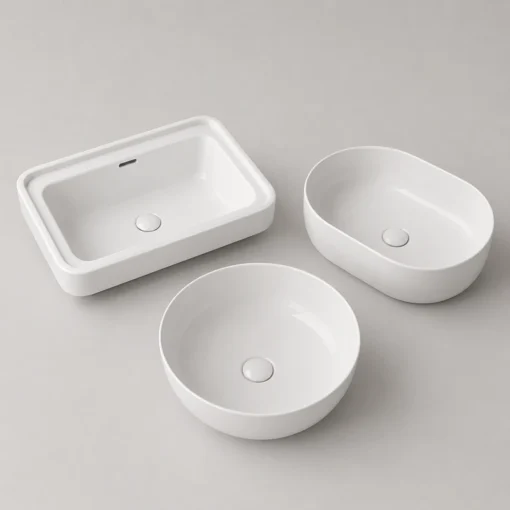













CERAMIC SINK PROBLEMS: 12 COMMON QUESTIONS ANSWERED

QUESTION 1: HOW DO I FIX A CHIPPED CERAMIC SINK?   “I dropped something and now there’s a chip.” — Margaret T., Seattle   ANSWER: You can repair it yourself:   What You Need: Ceramic/porcelain repair kit (two-part epoxy), fine sandpaper (400/600 grit), rubbing alcohol.   Steps:
  1. Clean chip with rubbing alcohol
  2. Lightly sand around chip with 400-grit
  3. Mix epoxy according to instructions
  4. Press into chip, slightly overfill
  5. Let cure 24 hours (keep dry)
  6. Sand smooth with 400 then 600 grit
  7. Buff with soft cloth
  When to Call a Pro: Large cracks, multiple chips, or antique sinks.   —   QUESTION 2: HOW DO I REMOVE HARD WATER STAINS?   “White crusty stains around faucet won’t scrub off.” — David R., Chicago   ANSWER: Method 1: Soak paper towels in white vinegar, press to stains for 30-60 minutes, wipe clean. Method 2: Make baking soda paste, apply 15-20 minutes, gently scrub. Method 3: Commercial products like CLR (follow instructions).   ⚠️ Never use abrasive scrubbers—they scratch the finish.   Prevention: Wipe sink dry after each use.   —   QUESTION 3: HOW DO I CLEAR A SLOW DRAIN?   “Water drains slowly. Drain cleaner didn’t help.” — Patricia M., Boston   ANSWER: Stop using chemical cleaners—they damage pipes.   Step 1: Remove and clean the stopper (hair and soap clump likely there). Step 2: Pour 1/2 cup baking soda + 1/2 cup vinegar down drain, wait 15 minutes, flush with hot water. Step 3: Use sink plunger vigorously 15-20 times. Step 4: Remove and clean P-trap (bucket underneath, loosen slip nuts). Step 5: Use plumber’s snake if still clogged.   —   QUESTION 4: HOW DO I FIX A LEAK AT THE SINK RIM?   “Water pooling under vanity. Leaking where sink meets counter.” — Derek S., Austin   ANSWER: For drop-in sinks:
  1. Cut away old caulk with utility knife
  2. Clean both surfaces with rubbing alcohol
  3. Apply continuous bead of 100% silicone caulk
  4. Smooth with wet finger
  5. Let cure 24 hours—no water during curing
  For undermount sinks: Check mounting clips underneath. Tighten any loose ones. If still leaking, professional help may be needed.   —   QUESTION 5: HOW DO I REMOVE RUST STAINS?   “Orange-brown stains that look like rust.” — Michelle R., Portland   ANSWER: Method 1: Sprinkle salt, add lemon juice, let sit 30 minutes, scrub gently. Method 2: Cream of tartar paste with hydrogen peroxide. Method 3: Bar Keepers Friend or commercial rust remover.   Prevention: If rust keeps returning, you may have iron in your water—consider a water softener.   —   QUESTION 6: HOW DO I REPAIR A CRACKED SINK?   “Hairline crack in my sink. Can I fix it?” — Thomas B., Phoenix   ANSWER: Repairable if: Hairline crack, not under stress (like drain area), surface only.   Repair process:
  1. Clean thoroughly with alcohol
  2. Apply thin epoxy, working it into crack
  3. Let cure 24 hours
  4. Sand smooth
  Replace if: Crack extends across bowl, goes through to underside, around drain/faucet holes, or water has caused staining around crack.   —   QUESTION 7: HOW DO I REMOVE SCRATCHES?   “Fine scratches from years of use.” — Elena G., San Francisco   ANSWER: For light scratches: Apply automotive polishing compound to soft cloth, rub gently in circles, wipe clean, repeat if needed.   For deeper scratches: Wet-sand with 1000+ grit sandpaper (keep wet), then polish.   ⚠️ Test in inconspicuous area first. Aggressive sanding can remove glossy finish.   —   QUESTION 8: HOW DO I WHITEN A YELLOWED SINK?   “White sink developed yellowish tint.” — Robert J., Cleveland   ANSWER: Method 1: Fill with warm water + 1/4 cup bleach, soak 15-20 minutes, rinse thoroughly. Method 2: Baking soda + hydrogen peroxide paste, sit 30 minutes. Method 3: Oxygen bleach soak overnight.   ⚠️ Never mix bleach with other cleaners.   If yellowing persists, it may be age-related crazing (fine cracks) that need professional refinishing.   —   QUESTION 9: HOW DO I FIX A LOOSE FAUCET?   “Faucet wobbles when I use it.” — Amanda W., Nashville   ANSWER: Step 1: Get under vanity with flashlight. Step 2: Identify mounting nuts (large plastic or small metal). Step 3: Tighten with appropriate tool—just snug, don’t overtighten. Step 4: Check for wobble, tighten more if needed. Step 5: Run water and check for leaks.   ⚠️ Ceramic can crack if you apply too much force. Stop if it won’t tighten reasonably.   —   QUESTION 10: HOW DO I PREVENT SOAP SCUM?   “Soap scum keeps building up.” — Karen L., Seattle   ANSWER: Daily: Squeegee or wipe sink dry after use. Use liquid soap instead of bar soap. Weekly: Clean with vinegar + dish soap mixture. Monthly: Baking soda paste scrub.   Hard water makes soap scum worse. A water softener helps significantly.   —   QUESTION 11: CAN I USE BLEACH IN MY SINK?   “Is bleach safe for ceramic?” — James L., Denver   ANSWER: Yes, diluted bleach is generally safe.   Safe use: Dilute 1/4 cup per gallon water, limit contact to 15-20 minutes, rinse thoroughly, ensure ventilation.   Avoid: Undiluted bleach, mixing with other cleaners (especially ammonia—toxic gas), long soaking, use on colored glazes without testing.   —   QUESTION 12: WHEN SHOULD I REPLACE INSTEAD OF REPAIR?   “Repair or replace? How to decide.” — David K., Miami   ANSWER: Repair if: Small chip, hairline crack not under stress, light scratches, minor stains.   Replace if: Large crack across bowl, multiple cracks/chips, sink loose from counter, extensive crazing, water damage below, repair costs near 50% of replacement. Cost comparison:
  • DIY repair kit: $10-25
  • Professional repair: $100-250
  • New sink: $150-500
  • Complete new vanity top: $300-1000+
STILL HAVE QUESTIONS? Comment below!   EXPLORE CITTANEO VANITIES: https://zmn.dakweb.top/   TAGS: ceramic sink, sink repair, bathroom maintenance

Leave a Reply

Your email address will not be published. Required fields are marked *